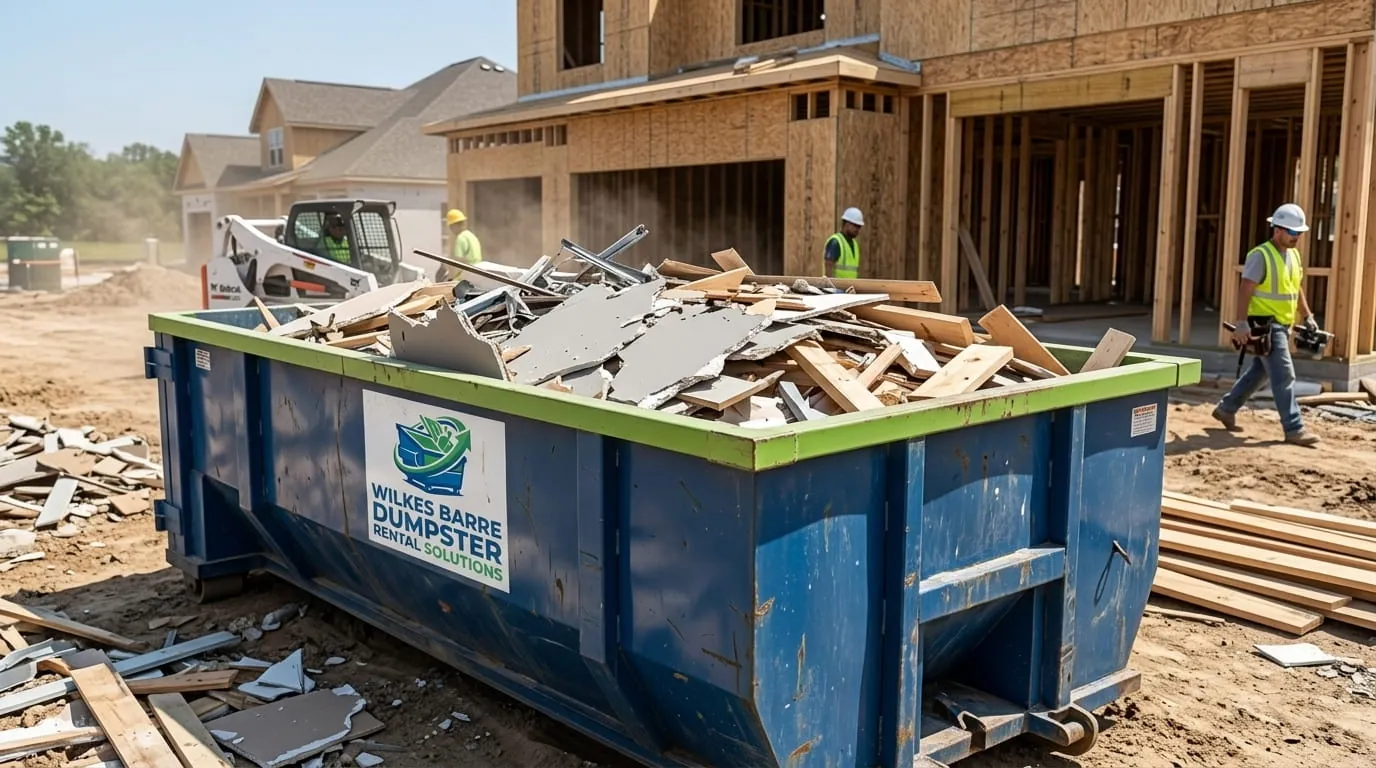
Every renovation, tear-off, and new build in Wilkes-Barre generates a pile of construction and demolition (C&D) debris, and how you handle it decides whether your job site stays clean, safe, and on schedule. Toss everything into one container without a plan and you'll pay for overweight loads, blow through your budget, and risk a rejected dump ticket. Do it right and disposal becomes just another line item you control.
This guide walks Luzerne County contractors and Wyoming Valley homeowners through sorting C&D debris, knowing what's recyclable versus landfill-bound, sizing the right container, and following Pennsylvania disposal rules. If you'd rather skip straight to a solution, call (570) 569-0695 and we'll match a dumpster to your project.
Why Sorting Construction Debris Pays Off
The single biggest reason to sort C&D debris is weight. Landfills and transfer stations charge by the ton, and the heaviest materials on a job site (concrete, brick, asphalt shingles, and dirt) can quietly push a mixed load past the container's weight limit. When that happens, you get hit with overage fees or, worse, a load the hauler won't take until you remove material by hand.
Sorting also unlocks recycling. Clean, separated streams of wood, metal, and concrete can often be diverted from the landfill, and in many cases that's cheaper than burying them. On top of that, a sorted site is a safer site: nails, jagged metal, and broken drywall spread across a work area cause injuries and slow every crew that has to walk through it.
Rule of thumb: keep heavy inorganic material (concrete, brick, dirt, shingles) separate from light bulky material (wood, drywall, cardboard). Mixing the two is how a 30-yard dumpster hits its weight cap when it's only half full.
Know Your Debris: Recyclable vs. Landfill
Not all construction waste is created equal. Some streams have strong recycling markets in Pennsylvania; others are headed for the landfill no matter what. Here's how the common materials on a Wilkes-Barre job site break down.
The Big Five C&D Materials
- Wood - Clean, untreated dimensional lumber and pallets are frequently recyclable or reusable. Painted, stained, or pressure-treated wood is generally landfill-bound because of the chemicals involved.
- Drywall - New scrap drywall (gypsum) can sometimes be recycled, but demolition drywall mixed with paint, screws, and joint compound usually goes to the landfill.
- Metal - One of the easiest wins. Steel studs, copper pipe, aluminum, ductwork, and rebar all have scrap value and should always be pulled out.
- Concrete, brick & block - Heavy but highly recyclable. Clean concrete is crushed into aggregate for road base and fill, so it belongs in a dedicated heavy-debris container.
- Asphalt shingles - Extremely heavy and recyclable in some markets into new pavement. Keep tear-off shingles by themselves to protect against weight overages.
Debris Type to Disposal Route
| Debris Type | Recyclable? | Best Disposal Route |
|---|---|---|
| Clean, untreated wood | Often yes | Wood recycling or C&D dumpster |
| Treated/painted wood | No | General C&D dumpster (landfill) |
| New scrap drywall | Sometimes | Gypsum recycler where available |
| Demolition drywall | No | General C&D dumpster |
| Metal (steel, copper, aluminum) | Yes | Scrap metal recycler |
| Concrete, brick, block | Yes | Dedicated heavy-debris/clean-fill container |
| Asphalt shingles | Sometimes | Separate shingle load or heavy-debris dumpster |
| Plaster & lath (older homes) | No | General C&D dumpster |
| Cardboard & packaging | Yes | Cardboard recycling |
| Insulation | No | General C&D dumpster |
Wyoming Valley Renovation Debris: Plaster & Lath
Wilkes-Barre and the surrounding Wyoming Valley are full of older homes, and if you've gutted one you know the challenge: plaster and lath. Instead of modern drywall, these walls are built from wood lath strips packed with dense, horsehair-reinforced plaster. It's heavy, dusty, and non-recyclable, so it heads to the landfill.
Two things to plan for when demoing plaster-and-lath walls. First, the weight: plaster is deceptively dense, so a room's worth can eat up a container's tonnage allowance fast. Treat it like heavy debris and keep it out of your light-materials pile. Second, the dust and debris volume is significant, which is why a right-sized container staged close to the work makes the whole tear-out faster and cleaner. Our demolition debris removal service is built for exactly these full-gut renovation jobs.
Pennsylvania Disposal Rules Every Contractor Should Know
Pennsylvania regulates C&D waste under the Department of Environmental Protection (DEP), and a few rules matter on nearly every Luzerne County job:
- No hazardous materials in your dumpster. Paint, solvents, adhesives, asbestos, fluorescent tubes, and other hazardous or universal wastes are prohibited from standard C&D containers and must be handled through proper channels. Older homes in particular may contain asbestos in flooring, pipe wrap, or siding, so test before you demo.
- Clean fill is treated differently. Uncontaminated concrete, brick, block, and soil can qualify as "clean fill" under PA rules, which is why keeping it separate opens up cheaper, more sustainable disposal options.
- No liquids, tires, batteries, or appliances with refrigerant in a general debris container without arranging proper handling first.
When you're unsure whether something can go in the box, ask before it goes in. A quick call to (570) 569-0695 saves you from a contaminated load and a rejection fee.
Right-Sizing Your Dumpster and Using Swaps
Container sizing is where contractors either save money or bleed it. Order too small and you're paying for extra hauls; order too big for heavy material and you'll hit the weight limit long before you fill the volume.
Matching Size to Material
For light, bulky debris like wood framing, drywall, cabinetry, and roofing tear-off (volume-heavy but not dense), a larger container like a 30-yard dumpster is usually the sweet spot. It gives your crew fewer swaps and more room to keep the site clear.
For heavy, dense material like concrete, brick, block, and plaster, go the other way. A smaller dedicated container fills to its weight limit well before it looks full, and that's by design. Our concrete and heavy debris service uses containers sized specifically for tonnage so you never overload. For general framing and finish work, a standard construction dumpster rental handles the everyday mixed C&D stream.
Using Swap-Outs to Keep the Job Moving
On a multi-phase project, a full container sitting on site is a bottleneck. A swap-out, where we haul the full box and drop an empty in the same spot, keeps your crew productive and your work area clear. Schedule swaps around your project phases (demo, framing, finish) so you're never waiting on a container or working around an overflowing one.
Pro tip: stage your container as close to the work as your site allows, and load it as you go rather than in one end-of-day scramble. A clean-as-you-work rhythm prevents the trip hazards and lost time that come from a debris pile taking over the job site.
Contractor Tips for a Clean, On-Schedule Site
- Set up sorting stations early. Mark a spot for metal, a spot for clean wood, and your main C&D container before demo starts. Sorting is easy when it's built into the workflow and painful when it's an afterthought.
- Break down bulky items. Flattening cardboard and breaking apart cabinetry maximizes the volume you actually use in the box.
- Load flat and low first. Distribute heavy material across the floor of the container rather than piling it in one corner.
- Keep the swap number handy. When a box fills faster than expected, a same-day or next-day swap keeps you on schedule.
- Don't overfill. Debris above the container's fill line can't be legally or safely hauled and will need to be removed before pickup.
Get the Right Container for Your Wilkes-Barre Project
Disposing of construction debris the right way comes down to three habits: sort by material, keep heavy stuff separate, and match your container size to what you're throwing away. Follow those and you'll control costs, stay compliant with PA rules, and keep your site safe and moving.
Whether you're gutting a century-old home in the Wyoming Valley or framing a new build in Luzerne County, we'll help you pick the right box and set up swaps that fit your schedule. Call (570) 569-0695 or contact us today to get your construction debris disposal handled the right way.
Founder, Wilkes Barre Dumpster Rental Solutions — sharing straight advice from more than 15 years of local hauling experience.