You booked a dumpster to finally clear out the garage, tackle a roof tear-off, or gut that back bedroom. Good. But right before the truck backs up your driveway, a small worry creeps in: is this thing going to crack my concrete or leave a gouge in my asphalt? It is a fair question. A roll-off container is heavy on its own, and once you start loading shingles, tile, or wet debris, the total weight sitting on your driveway can climb into several tons concentrated on a few small contact points.
The good news is that driveway damage during a dumpster rental is almost entirely preventable. With a little planning, the right protection under the container, and a delivery crew that knows what they are doing, your driveway comes through the project looking exactly like it did before. Here is how homeowners across Luzerne County and the Wyoming Valley keep their driveways safe.
How a Roll-Off Can Actually Damage a Driveway
Understanding the three ways damage happens makes it much easier to prevent. It is rarely the dumpster just sitting there that causes trouble; it is the load, the movement, and the conditions underneath.
Point-load pressure (cracks and gouges)
A roll-off does not rest flat on your driveway. It sits on a set of steel rails and small wheels or feet, so the entire weight of the container plus its contents presses down through a handful of narrow contact points. That concentrated pressure is what cracks concrete and dents or gouges asphalt, especially on hot summer days when NEPA asphalt softens. The heavier and more concentrated the load, the more a driveway with an existing hairline crack or a soft spot is at risk.
Scraping and dragging (surface scars)
Damage also happens in motion. When the truck rolls the container off its bed or drags it back on for pickup, the steel edges can scrape the surface if there is nothing between the metal and the driveway. A quick, careless drop or a container hauled off at an angle is where most surface scars come from.
Stains and residue
Even without a crack, a driveway can be marked by rust from the container's frame, or by drips of paint, oil, or roofing tar leaking out the debris inside. On light concrete these stains show up clearly and can be tough to remove.
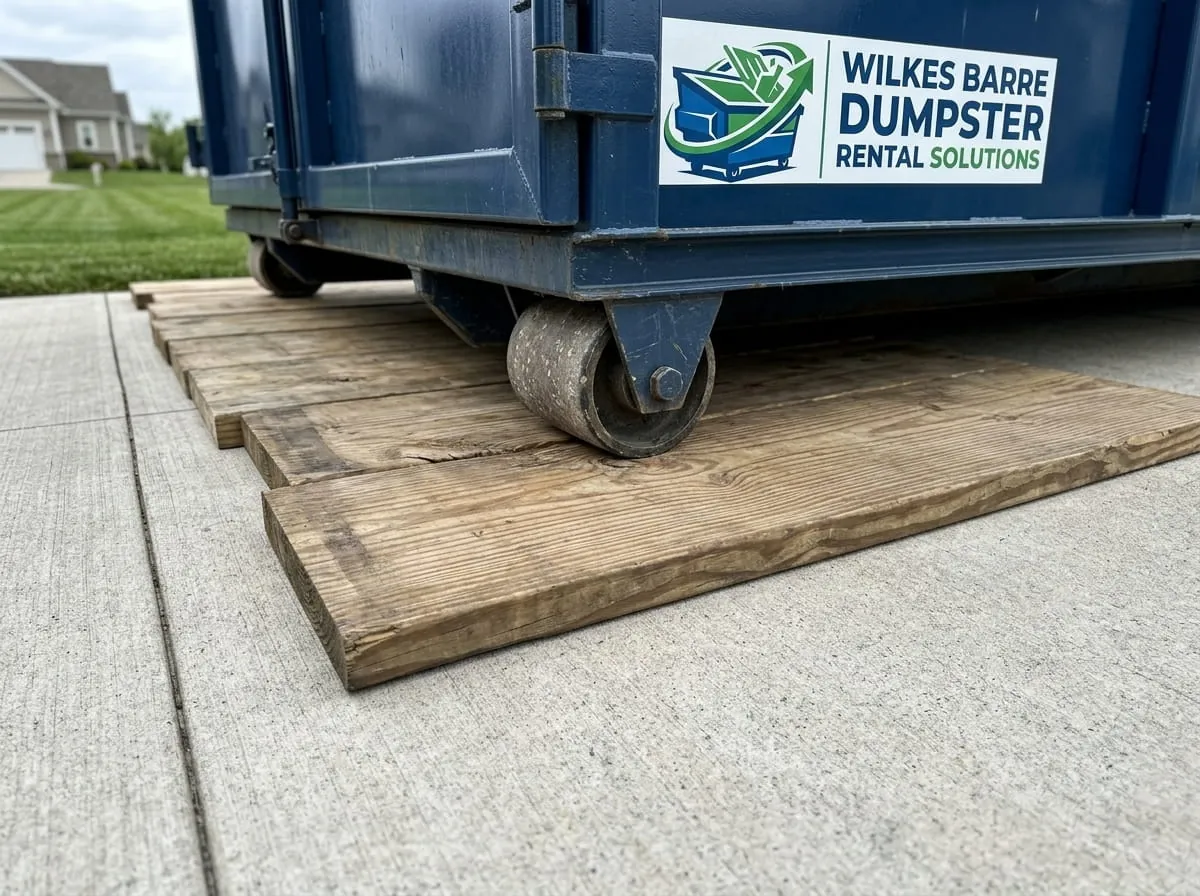
The single most effective thing you can do is put a barrier between the steel and your driveway. Two-by-fours or sheets of plywood under the container's contact points spread the load and stop both gouging and scraping. It is cheap insurance that takes five minutes.
Protecting the Contact Points
The pros call it "cribbing" — laying down boards so the container never touches your driveway directly. For most residential jobs, a few lengths of pressure-treated 2x8 or 2x10 lumber, or thick sheets of plywood, placed where the rear rollers and front rails will land does the job. The boards spread that concentrated point load across a much wider area and give the steel something to grind against besides your concrete.
A few tips that make cribbing work:
- Lay boards under both the rear wheels and the front contact points, running the length of where the container will sit.
- Use solid, unbroken lumber — a cracked or rotted board defeats the purpose.
- Tell the delivery driver where you want the container before they arrive so they can set it down right on top of the boards.
- For decorative or stamped concrete, add an extra layer of plywood on top of the boards for good measure.
Choosing the Right Spot
Placement matters as much as protection. Aim for the flattest, most solid section of your driveway. Slopes make it harder to level the container and can concentrate weight toward the low end. Avoid parking a heavy roll-off directly over a driveway seam, an old patch, a drain, or the very edge of the slab where concrete is weakest and most likely to crack.
Think about weight distribution while you load, too. Spreading heavy material like concrete chunks, dirt, or roofing across the floor of the container rather than piling it all in one corner keeps the load balanced over the contact points. Right-sizing the container helps here — a properly matched size for your project means you are not overloading a small box. Our 20-yard dumpster is a popular middle-ground for driveway placement on home cleanouts and small remodels because it holds a real load without an oversized footprint.
Asphalt, Concrete, and Pavers Each Behave Differently
Asphalt
Asphalt is the most temperature-sensitive surface in the region. In a Wilkes-Barre July, the sun can soften an asphalt driveway enough that container feet or wheels press right in and leave permanent dimples. Cribbing with wide boards is especially important on asphalt, and if possible, schedule delivery and pickup for the cooler morning hours rather than the hottest part of the afternoon.
Concrete
Concrete is harder and holds up well to weight, but it is brittle. It does not dent — it cracks. Existing hairline cracks, control joints, and edges are the vulnerable spots. Good load distribution and boards under the rails keep concrete intact. Concrete also stains easily, so keeping the container off the bare surface protects against rust marks too.
Decorative pavers
Interlocking pavers and stamped surfaces are the trickiest. Individual pavers can shift, sink, or crack under a point load, and their set sand can get disturbed. Honestly, if your driveway is high-end pavers, the safest choice is often to keep the dumpster off it entirely and place it on the street instead. If it must go on pavers, use a full plywood platform to spread weight across many units at once.
Driveway vs. Street Placement
When a driveway is too steep, too fragile, or too precious to risk, the street is your alternative. Street placement takes the weight off your property completely — but in Wilkes-Barre and many surrounding boroughs, putting a dumpster on a public street or right-of-way usually requires a permit. Before you plan on street placement, read our guide on whether you need a permit for a dumpster in Wilkes-Barre, PA so there are no surprises. If you are unsure which option fits your property, that is exactly the kind of thing to talk through with us before booking.
Not sure whether your driveway or the street is the smarter call? Give us a ring at (570) 569-0695 and we will help you figure it out.
Winter and Freeze-Thaw in NEPA
Northeastern Pennsylvania winters put driveways through a brutal freeze-thaw cycle. Water works into small cracks, freezes, expands, and pries the crack wider — over and over. A heavy dumpster sitting on a spot that already has moisture in a hairline crack can accelerate that damage when a cold snap hits. In winter, keep the container off any visibly cracked areas, avoid placing it where meltwater and ice pool, and be extra diligent with cribbing since frozen ground and salted, brittle asphalt react poorly to concentrated weight. Shorter rental windows in deep winter also reduce the exposure.
What a Good Dumpster Company Does Automatically
A big part of driveway protection is simply hiring a company that treats your property like it matters. When you rent from us, careful placement is not an upgrade — it is how we operate. Our drivers slow down, communicate about exactly where the container goes, set it down gently rather than dropping it, and are happy to place boards under the contact points. We help you pick the right size so your driveway is never carrying more than it should, and we plan pickups the same careful way. You can see the full range of what we handle on our services page, and homeowners can learn more about our residential dumpster rental options built for exactly these projects.
Your Driveway Protection Checklist
- Lay 2x8/2x10 boards or plywood under the container's contact points (cribbing).
- Choose a flat, solid spot away from seams, edges, drains, and old patches.
- Distribute heavy debris evenly across the container floor while loading.
- Right-size the container so you are not overloading a small box.
- On hot days, schedule delivery for cooler morning hours to protect asphalt.
- Keep the dumpster off cracked areas and pooling meltwater in winter.
- Consider street placement for delicate pavers (check the permit first).
- Tell the driver exactly where you want it before they arrive.
Protecting your driveway comes down to a barrier, a smart spot, and a delivery crew that cares. Handle those three things and your driveway will look the same the day the dumpster leaves as it did the day it arrived.
Ready to book a dumpster and keep your driveway safe? Call Wilkes Barre Dumpster Rental Solutions at (570) 569-0695 or contact us online to get started.
Founder, Wilkes Barre Dumpster Rental Solutions — sharing straight advice from more than 15 years of local hauling experience.