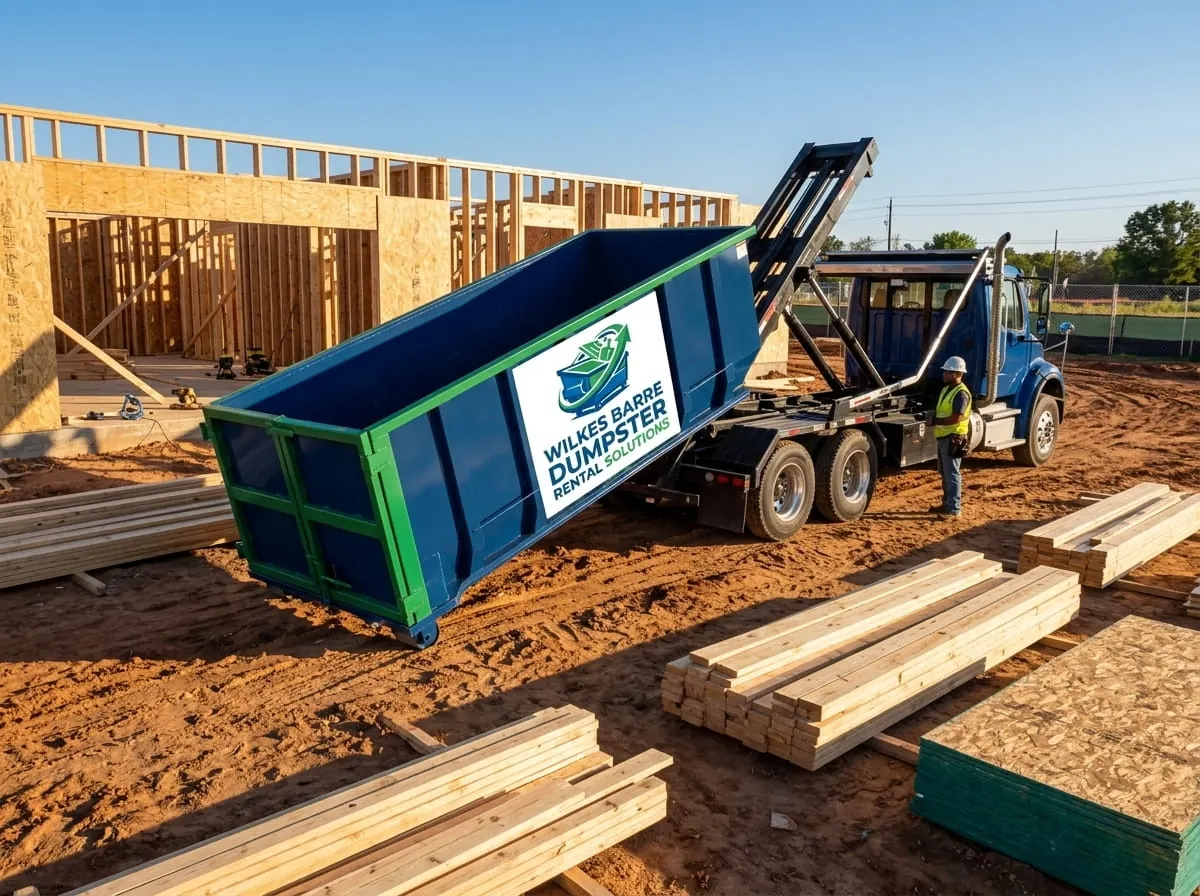
If you've ever hauled a single bundle of shingles up a ladder, you already know a secret that catches a lot of Wilkes-Barre homeowners off guard: roofing debris is deceptively, punishingly heavy. A dumpster that looks half empty can already be maxed out on weight. Around the Wyoming Valley, where many homes carry decades of accumulated roofing layers, sizing a tear-off bin correctly is less about how much space you need and more about how many pounds you're throwing away.
This guide walks through how to choose the right roofing dumpster in Wilkes-Barre, PA for a tear-off, why a smaller bin within its weight limit almost always beats an oversized one, and how to work smoothly with your roofing crew so you're not stuck with surprise overage fees.
Why Roofing Debris Weighs So Much
Asphalt shingles are made to shed water and survive Northeastern PA winters, so they're dense by design. A common way to measure a roof is in "squares" — one square equals 100 square feet of roof surface. As a rough working figure, a single layer of asphalt shingles runs somewhere in the neighborhood of 250 pounds per square, and that climbs fast once you add underlayment, old felt, nails, and any wet or ice-damaged material.
Do the quick math on even a modest roof. A small ranch might have 15 to 20 squares. One layer of tear-off on 18 squares can push past two tons of debris before you've touched a second layer. That's why the volume of the dumpster is only half the story — the weight limit is the number that actually controls your job.
The single most expensive mistake homeowners make on a roofing job isn't renting a bin that's too small — it's filling a big bin past its weight limit and getting hit with per-ton overage charges they never saw coming.
Volume vs. Weight: The Trade-Off Nobody Explains
Here's the counterintuitive part. For roofing, a physically smaller dumpster with an appropriate weight allowance often serves you better than a big one. Shingles are so heavy that you'll hit the tonnage cap long before you fill a 20- or 30-yard container to the top. Paying to rent all that extra empty space does nothing but tempt you into overloading. A right-sized bin keeps the debris low, keeps loading easy, and keeps you inside your weight allowance.
For most residential tear-offs in Luzerne County, a 10-yard dumpster or a 15-yard dumpster is the sweet spot. These low-profile bins are built for dense, heavy material — the low walls make it easy to toss shingles in from ground level, and the tonnage is matched to what a roof actually produces.
Count Your Layers First — Especially on Older Wyoming Valley Homes
Before you can size anything, you need to know how many layers of roofing are coming off. This matters enormously here. Many older homes across Wilkes-Barre, Kingston, Plymouth, and the surrounding boroughs have been re-roofed over the existing shingles at least once. It's not unusual to peel back and find two or even three layers stacked up.
Every extra layer roughly multiplies your debris weight. A two-layer tear-off on the same 18-square roof isn't a little heavier — it's essentially double the tonnage. Three layers, triple. If you assume one layer and order accordingly, a multi-layer surprise can blow past your weight limit in an afternoon.
How to check before you order:
- Ask your roofer to inspect the roof edge or a vent boot — they can usually count layers by eye.
- Lift a shingle at the eave and look at the cross-section thickness.
- Check permit or improvement records if the home changed hands recently.
- When in doubt, assume more layers rather than fewer and size up your weight allowance accordingly.
Roof Size to Dumpster Size: A Starting Guide
Use the table below as a starting point for a standard asphalt tear-off. These are general guidelines — layer count, wet debris, and added materials like decking all shift the numbers. When your job sits near a boundary line, call and we'll talk it through.
| Roof Size (Squares) | Layers | Suggested Bin | Notes |
|---|---|---|---|
| Up to 15 squares | 1 layer | 10-yard | Ideal for garages, small ranches, additions |
| 15 to 25 squares | 1 layer | 15-yard | Most common single-family homes |
| Up to 15 squares | 2 layers | 15-yard | Weight, not space, is the limiting factor |
| 20 to 30 squares | 2 layers | 15-yard + weight check | Call to confirm tonnage before ordering |
| 25+ squares | 2 to 3 layers | Two hauls or larger allowance | Swap-out service often cheaper than overage |
Not sure where your roof lands? Our broader guide on what size dumpster you need breaks down the volume side, and our roofing dumpster rental service page covers weight allowances specific to shingle jobs.
Still guessing? Skip the math and call us at (570) 569-0695. Tell us your roof's rough footprint and layer count, and we'll point you to the right bin in about two minutes.
Placement: Get the Bin Close and Protect Your Property
On a tear-off, distance is labor. Every foot between the roof edge and the dumpster is a foot a crew has to carry or a shingle that has to be pitched further. The goal is to place the container as close to the base of the work as safely possible — ideally right under the section being torn off so debris can go more or less straight in.
Protect Your Driveway
Heavy roofing bins can mark or stress a driveway, and dropped shingles have sharp granules and nails. Lay down plywood or boards under the container's wheels and tongue before it's set. This spreads the load and shields asphalt or concrete from point pressure and scuffing. A few sheets of plywood are a lot cheaper than repairing a cracked driveway.
Clear Access and Overhead
Our trucks need room to drop and retrieve the bin. Check for low branches, power lines, and tight gates. A clear, level spot near the work area — driveway or side yard — makes drop-off, loading, and pickup smooth for everyone.
Snow, Ice, and the Wilkes-Barre Weather Factor
Wyoming Valley sits squarely in the snow-and-ice belt, and that shapes roofing work in two ways. First, timing: freeze-thaw cycles and ice dams drive a lot of local roof damage, so tear-offs often follow a hard winter. Second, weight: shingles that have soaked up snowmelt or been sitting under ice are noticeably heavier than dry material. Waterlogged debris can quietly push your tonnage up.
If you're tearing off after wet weather or in early spring, build in a little weight cushion and don't fill the bin to the absolute brim. Wet shingles compound the weight problem that already makes roofing debris tricky. When in doubt, a slightly conservative load beats an overage fee.
Working With Your Roofer
If you've hired a roofing contractor, coordinate the dumpster early. A few questions to settle before the bin arrives:
- Who's ordering? Some roofers include a dumpster; some expect you to provide one. Confirm so you're not double-booked or short a bin.
- Layer count? Your roofer's estimate is the best source for sizing.
- Timeline? Line up drop-off for the day before the tear-off so the crew isn't waiting.
- Loading only roofing material? Keep the bin shingles-only. Mixing in general junk can complicate disposal and pricing.
A quick heads-up to us about your project details lets us match the right container and weight allowance to the actual job — no guesswork, no surprises.
How to Avoid Overage Fees
Overage fees happen when your debris exceeds the dumpster's included weight allowance, billed per additional ton. On roofing jobs, this is the main cost risk. Here's how to stay clear of it:
- Size by weight, not just volume. Match the bin to your squares and layers, not to how much empty space looks impressive.
- Count layers accurately. A missed second layer is the number-one cause of overages.
- Consider two smaller hauls. On big or multi-layer roofs, a swap-out or a second bin is often cheaper than blowing past a single bin's limit.
- Keep it roofing-only. Don't pad the load with other debris that eats into your allowance.
- Ask up front. Get your weight allowance in writing before the bin drops.
The honest truth is that most overage surprises are preventable with one phone call before you order. We'd rather help you size it right the first time than send you a bigger invoice later.
Ready to Size Your Roofing Tear-Off?
Roofing debris rewards planning. Know your squares, count your layers, mind the weight, and place the bin close on protected ground — do that, and a tear-off in Wilkes-Barre goes smoothly from first shingle to final haul.
When you're ready, call Wilkes Barre Dumpster Rental Solutions at (570) 569-0695 or reach out through our contact page. We'll match you with a right-sized, right-weight roofing bin and get it to your Luzerne County job site on schedule.
Founder, Wilkes Barre Dumpster Rental Solutions — sharing straight advice from more than 15 years of local hauling experience.